
Storm chasing in the UK: a beginner's guide
Storm chasing in Britain is not the movie version. There is no Tornado Alley here, but there are thunderstorms, towering shelf clouds and spectacular lightning, and a community of people who enjoy watching and photographing them safely. This is how it works, and how to start.
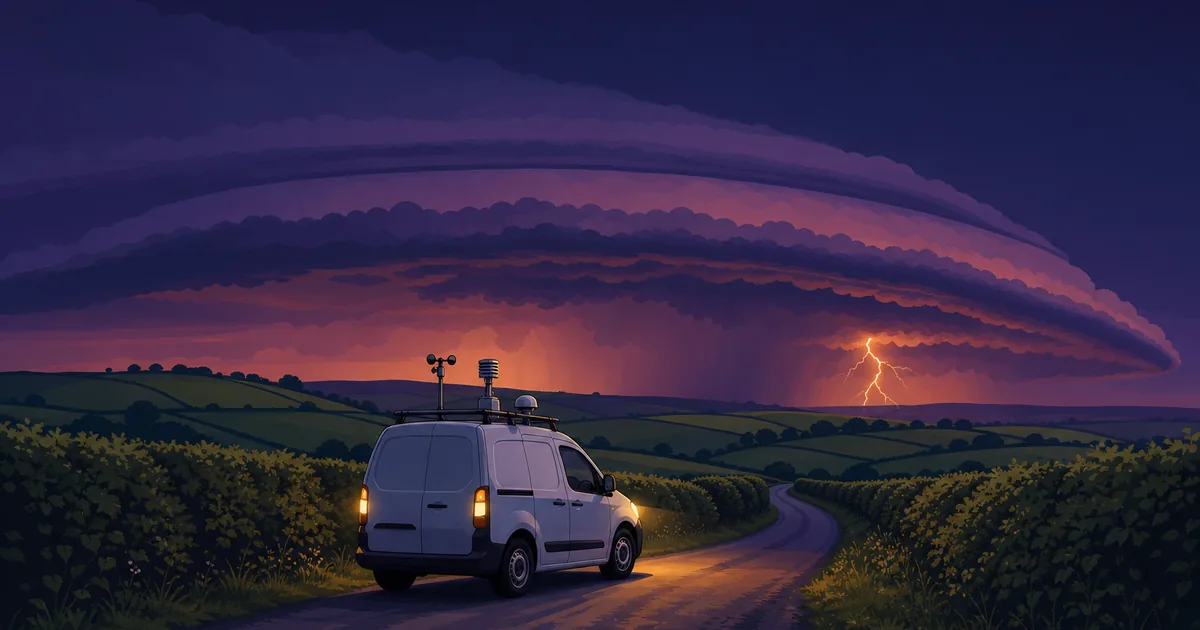
What storm chasing means in Britain
In the UK, storm chasing mostly means following thunderstorms: watching them build, photographing lightning, and catching dramatic cloud shapes such as shelf clouds on the leading edge of a storm. Funnel clouds and the occasional tornado do happen here, but they are brief and small, and nobody should set out expecting one. Our guide to UK tornadoes explains what is realistic.
When and where storms tend to happen
Thunderstorms are most likely on warm, humid days when the sun heats the ground and the air is unstable, so summer afternoons and evenings are the classic set-up. They can also come with active cold fronts at other times of year. Because storms move and pop up quickly, the useful question is not "where is the best place?" but "where does today's forecast put them?". That is what planning is for.
How chasers plan a day
- Convective outlook: guidance on where thunderstorms may develop and how organised they could be. Start with our Severe Outlook and read how to read a convective outlook.
- Rainfall radar: shows where rain is falling right now and which way it is moving. See how rainfall radar works.
- Lightning data: strike maps show which cells are electrically active, which matters more than how heavy the rain looks.
Check all three, then decide whether to go at all. Staying home on a marginal day is a good decision.
Safety and the law, in plain terms
- Driving: the Highway Code applies as normal. Plan routes before you set off, pull into a proper, legal place to stop, and never film or use a phone while driving. Heavy rain and standing water are a bigger everyday danger than lightning.
- Private land: most land has an owner. Stay on public roads, rights of way and places you are allowed to be, and do not block gateways or junctions.
- Lightning: thunder means you are close enough to be struck. Watch from a car or building, not from a hilltop or under a tree. Read our thunderstorm and lightning safety guide before your first outing.
Reporting what you see
A good report is evidence: what you saw, where, when and how severe. Our guide to reporting severe weather covers what to include, and you can see community reports on the live map.
UK organisations worth looking up
The Tornado and Storm Research Organisation (TORRO) describes itself as specialising in severe convective weather in Britain and Ireland and takes reports of severe weather. The Met Office is the source for official UK weather warnings. WeatherZ is independent of both.
Storm chasing from your sofa
If the weather is not playing along, or you would rather stay dry, ChaserZ is our free game built on the live UK weather. You place an HQ on a 3D map of Britain and send vehicles along real roads to real storms. It is a game, not a forecast, so use the guides above when you are deciding what to do outdoors.
Related reading: UK weather warnings explained · CAPE, wind shear and lifted index explained · UK storm names